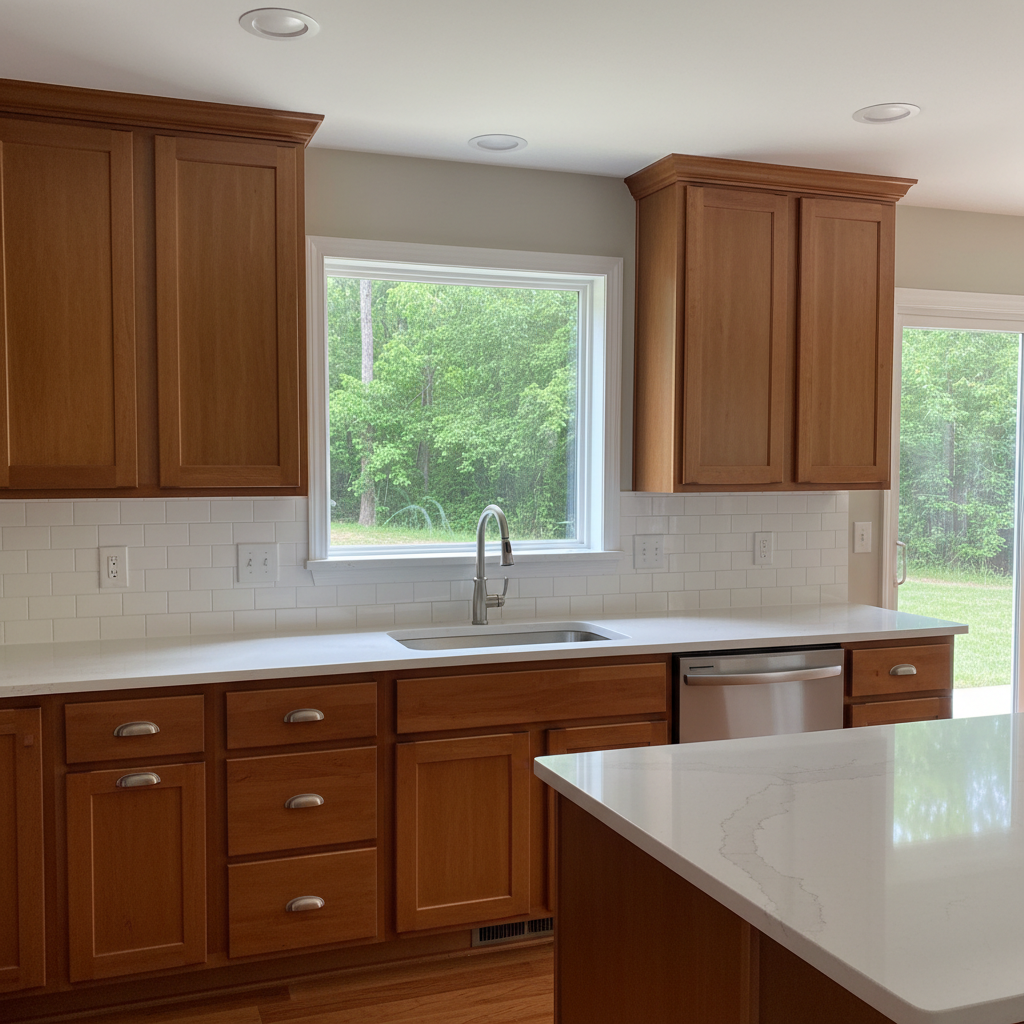
Look, I've seen a lot of staining and finishing jobs come through our shop, and I've heard even more horror stories from folks around Fayetteville. Whether you're trying to DIY or hiring someone, there are some common mistakes that can really mess up your project and leave you regretting the whole thing. I'm talking about anything from cabinets and built-ins to trim work or even furniture pieces you want to refresh. Let's talk about what to watch out for.
Ignoring the Prep Work
This is probably the biggest mistake I see, and it's the one that causes the most headaches down the line. People get excited about picking a color or a finish, but they forget that the final look is only as good as the surface underneath. You can't just slap new stain over old, dirty, or improperly sanded wood and expect it to look good. It'll be blotchy, uneven, and it won't last. Trust me on this one.
- Not cleaning properly: Grease, dust, old polish – it all needs to go. Use a good degreaser, then clean water. Let it dry completely.
- Skipping sanding or doing it wrong: Sanding opens up the wood grain so it can accept the stain evenly. If you don't sand enough, or if you use too coarse a grit and leave scratches, the stain will look terrible. And if you don't sand with the grain, you'll see those cross-grain scratches forever. It's a pain, but it's non-negotiable.
- Not conditioning: Especially with woods like pine, maple, or cherry, which are notorious for blotchiness, a pre-stain conditioner is your best friend. It helps the wood absorb the stain more evenly. Don't skip it if you want a professional look.
Picking the Wrong Product for the Job
Walk into any hardware store, and the stain aisle is overwhelming. There are oil-based, water-based, gel stains, stain-and-sealers, polyurethanes, lacquers, varnishes... it's a lot. And using the wrong one can be a disaster.
For instance, if you're trying to match an existing finish, you need to know what that finish is. You can't just put an oil-based stain over a water-based finish without proper stripping and prep, or vice versa, without risking adhesion issues. Or, if you're working on something that's going to see a lot of wear and tear, like kitchen cabinets, you need a durable topcoat. A simple stain isn't enough to protect it. We always talk through the use-case with our clients at Fayetteville Cabinet Makers to make sure the finish will hold up.
Not Testing the Stain (or Finish) First
The color swatch on the can? It's a suggestion, not a promise. How a stain looks depends entirely on the type of wood, its natural color, how it was sanded, and even how many coats you apply. You absolutely, positively, have to test your stain on an inconspicuous area of the actual piece you're working on, or on a scrap piece of the same wood. If you're refinishing kitchen cabinets, maybe test on the inside of a door or a drawer back. If you're doing a built-in, try the back side of a shelf. You'll be amazed at how different it can look.
Hiring the Cheapest Guy (or Gal)
I get it, everyone wants a good deal. But when it comes to finish work, cheap often means cutting corners. A true professional understands wood types, proper prep, application techniques, and the right products for longevity. Someone who gives you a rock-bottom price might be skipping steps, using inferior materials, or just not having the experience needed for a quality, lasting finish. You'll end up paying more in the long run to fix their mistakes.
Ask for references, look at their past work, and make sure they're insured. If they can't explain their process or why they choose certain products, that's a huge red flag. Especially here in Fayetteville, with our humidity and sometimes wild temperature swings, you need someone who knows how those conditions affect drying times and finish durability. A good contractor accounts for that.
Rushing the Job
Finishing is not a race. Each coat of stain or finish needs proper time to dry and cure according to the manufacturer's instructions. If you rush it, you'll get tacky surfaces, poor adhesion, and a finish that scratches or peels easily. Be patient. It's worth the wait for a beautiful, durable result.
So, whether you're tackling a project yourself or bringing in a pro, keep these things in mind. A little extra care and planning upfront will save you a lot of grief and money later on.